

This Fall, ApprenticeshipPHL (APHL) partnered with The Chamber of Commerce for Greater Philadelphia to host an Apprenticeship Accelerator Series with a focus on middle-market employers. The series was designed to help employers overcome skilled worker challenges by utilizing the apprenticeship model. Each session shined a light on three relevant topics for middle-market employers:
-
- Supporting Early Talent
- Effective Management Practices
- Upskilling & Retention
Part 1: Supporting Early Talent Through Registered Apprenticeship
October 15, 2025
Presentation Kick-Off:
We kicked off our first event in the series with a review of Registered Apprenticeship presented by Philadelphia Works staff Gloria Fallini and Robert Gannone. Next, we defined “Early Talent” and took a deeper look at what supporting early talent looks like in the context of the apprenticeship model.
“Hear From the Experts” – Panel Discussion:
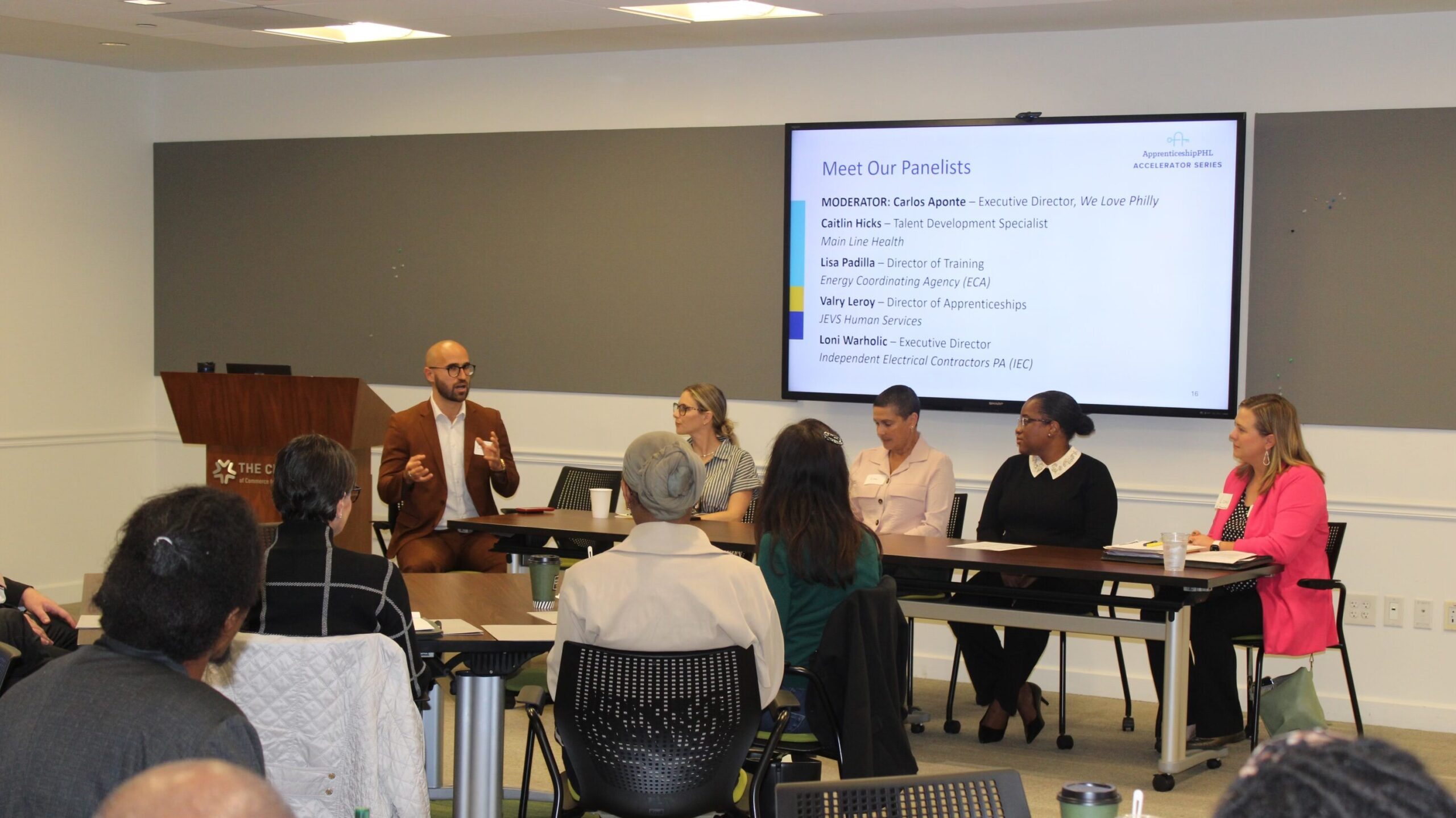
Following the opening presentation, we transitioned to an informative panel discussion moderated by Carlos Aponte, Executive Director and Founder of We Love Philly. During the panel, attendees heard from experts who manage Registered Apprenticeship Programs. Our panelists included:
-
- Caitlin Hicks – Main Line Health
-
- Lisa Padilla – Energy Coordinating Agency (ECA)
-
- Valry Leroy – JEVS Human Services
-
- Loni Warholic – Independent Electrical Contractors PA (IEC)
Our panelists shared how their programs support early talent workers and some best practices such as piloting the program before registering it with the state to grow capacity and begin training early talent workers right away. Running the program before registering it provides an opportunity to work out any unforeseen challenges with the program and allows the organization to increase the number of journeyworkers1 needed for the apprenticeship.
Another best practice shared was utilizing supportive services for the apprentices. Valry Leroy from JEVS makes sure that the apprentices are connected to PA CareerLink® for additional support and coaching, but sponsors can also connect apprentices to other community-based organizations for additional services to ensure that all the apprentices’ needs are being met.
Part 2: Effective Management Practices in Registered Apprenticeship
November 19, 2025
Presentation Kick-Off:
With our second event focusing on Effective Management Practices, Philadelphia Works’ staff, Gloria Fallini and Robert Gannone, presented how mentors and journeyworkers play a role in supporting apprentices. We took a deeper look into “A Framework for Advancing an Equitable and Inclusive Apprenticeship System”, created by the American Institutes for Research, and how support partners are integral to reinforcing the learnings of apprentices.
“Hear From the Experts” – Panel Discussion:
Following the opening presentation, we transitioned to an informative panel discussion, moderated by Adina Tayar, EDSI’s Regional Apprenticeship Manager for Bucks & Montgomery Counties. During the panel, attendees heard from Taylor Jeffers from Apprenti and Gabriela Deacon from LearnED Potential, as they discussed how their Registered Apprenticeship Programs work with mentors and supervisors to support their apprentices.
For Gabriela, who runs a teacher apprenticeship, one of her best practices for effective mentoring is having a supervisor at the site who acts as a dedicated person at the school supporting the apprentice teachers. Gabriela also noted that they utilize different tiers of support for apprentices and celebrate their successes as well as “let apprentices know that there are others in this journey with them.” Gabriela has seen the positive influence of effective mentorship within apprenticeships, noting that as “we have implemented this model with our employers, we’ve seen success and it has really had an impact.”
Taylor, who manages national IT apprenticeships, ensures that mentors are equipped with the knowledge to support the apprentices by describing the role of a mentor and its expectations. To further support fellow mentors, Taylor encourages supervisors and managers to share challenges and fears about mentoring an apprentice. Taylor understands that the apprenticeship can feel overwhelming at first to employers, but she speaks to them about identifying mentors, coaches, and onboarding buddies – a team of individuals who are each supporting in different ways. At the end of the apprenticeship, Taylor encourages employers to have an apprentice showcase to highlight their work to the entire organization, which builds apprentice enthusiasm for the program as they begin “setting up the next generation of apprentices as mentors now that they’ve completed the program.”
Part 3: Upskilling and Retention Through Registered Apprenticeship
December 10, 2025
Presentation Kick-Off:
We wrapped up our series with the third and final event taking place virtually on Zoom, which took a deeper look at upskilling and retention of talent and how apprenticeship can support and drastically impact these workforce needs.
“Hear From the Experts” – Guest Speaker Presentations:
We invited three Registered Apprenticeship Program Sponsors to our discussion where they were able to highlight features of their programs that have led to the upskilling and long-term retention of employees in each of their industries.
-
- Andrea Trubiano, Pennsylvania Restaurant & Lodging Association (PRLA)
-
- David Zuzga, The Wistar Institute
-
- Kimberly Kuehl, Early Connections.
Andrea coordinates PRLA’s nationally registered group-sponsored Hospitality Apprenticeship Program which has five different occupations that apprentices can pursue from Line Cook to Restaurant Manager. “Apprentices are really able to see the value in this program. They see support, they see learning opportunities every day, and they see a clear pathway upon completion of the program. For employers, our group program allows for cost-savings in administering industry-required trainings and certifications, as well as course work associated with becoming trained in the occupations.”
For David Zuzga, who manages a Biomedical Sciences Apprenticeship, engaging employers in this sector is an opportunity to expand pathways and apprenticeships into industries outside of the building trades and see more students engage in career and jobs early on. “Universities have continued to expand with more and more students going to college, but they really weren’t equipped for the hands-on occupation-specific training, so this is a tremendous opportunity to realign pathways for occupation-specific training through apprenticeships.”
Kimberly, who coordinates an Early Childhood Education Apprenticeship, stated that the combination of mentorship, wage increases, and on-the-job training are huge contributors to the successful upskilling and long-term retention of their apprentices both during and after their program. “We find that the wage increases and on-site coaching strengthens the bonds between staff members and initiates that reciprocal level of employee-employer investment which is central to the success of any attempt at retention.”
“Ask the Experts” – Q&A Discussion:
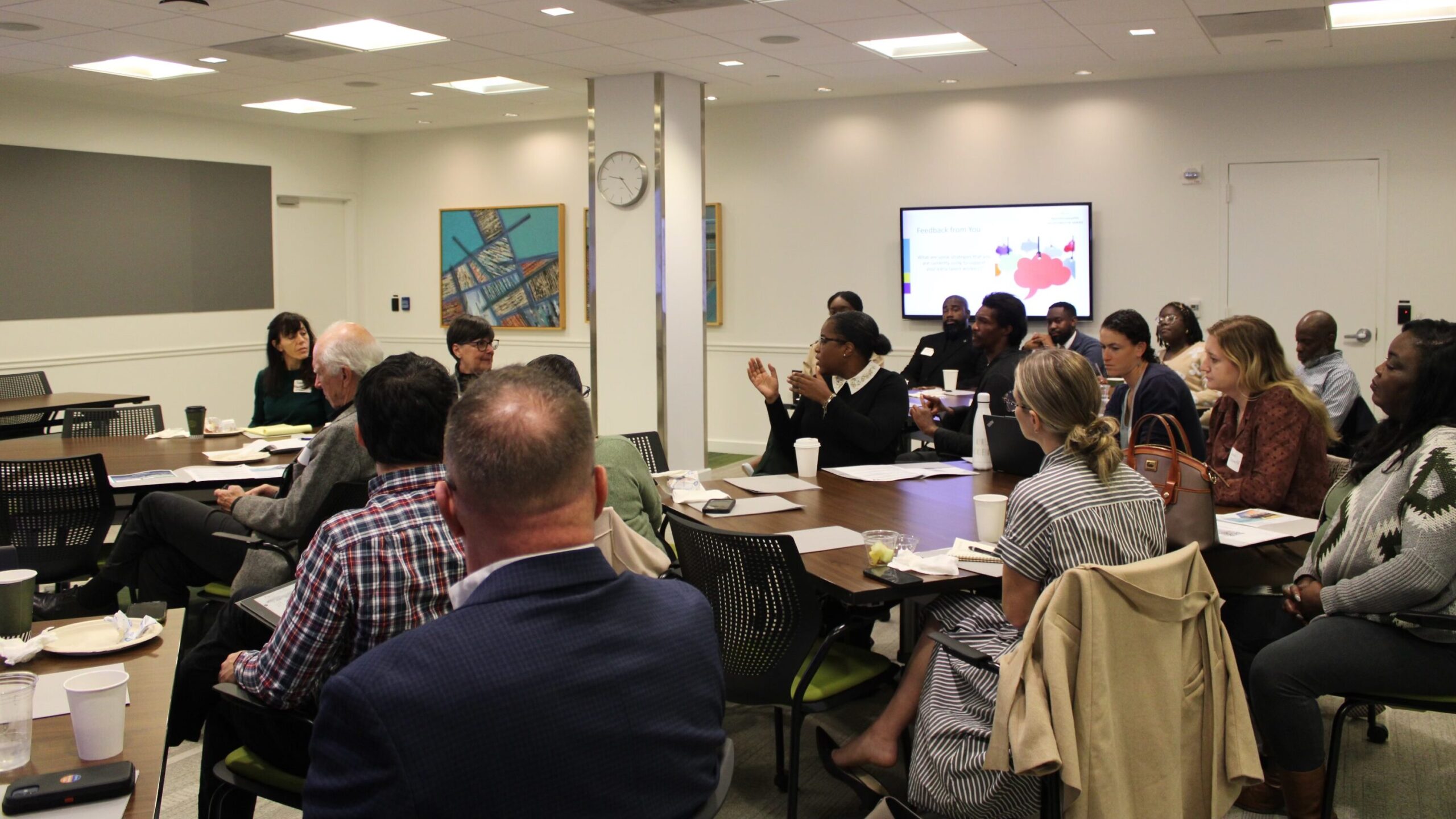
We concluded each event with some engaging Q&A discussions where attendees were able to connect with panelists and speakers one-on-one, learn more about apprenticeship programs, ask additional questions, and network with employers and other attendees.
Looking for More Info on Registered Apprenticeship?
Take a look HERE at our Apprenticeship Essentials resource that outlines the components of Registered Apprenticeship Programs and how to develop and register one. For additional information and to stay connected for future events, click here.
1- A worker who has attained a level of skills, abilities, and competencies recognized within an industry as mastery of the skills and competencies required for the occupation. It is what an apprentice is referred to after they successfully complete an apprenticeship program.